
How to choose a restaurant reservation system
Four products wear the label “booking system”
A free calendar, a $499 restaurant platform and a €49 booking layer are not the same purchase. Here is how to tell which one you are actually buying.
By Elena · G-Lab Studio · 14 September 2026 · 7 min read

I spent a day this month reading the pricing page of every booking platform I could open, and the thing that struck me was not the prices. It was that the same two words, booking system, were being used to sell four unrelated products.
That is why price comparisons in this market feel slippery. You are not looking at cheap versions and expensive versions of one thing. You are looking at four different businesses that happen to share a search term, and the bill follows the business model, not the feature list.
At a glance
The four types of booking system
Same label, four different things you pay for. Read across a row to see what you are really buying.
Type 1
You buy: Demand
Marketplace
- How it charges
- A subscription plus a share of a new client’s first visit, typically a fifth to a third of it
- Built for
- Places that need strangers to find them
- Where it stops
- Your own guests: the fee can follow the link, not the person
Type 2
You buy: Depth
Operations suite
- How it charges
- From the low hundreds a month, and it climbs
- Built for
- Restaurants where the reservation book is a full-time job
- Where it stops
- Budget: floor plans and POS links you may never use
Type 3
You buy: A calendar
Scheduler
- How it charges
- From nothing to a few dollars per user
- Built for
- Anyone who books their own diary
- Where it stops
- Where the calendar stops: no page, no guest memory
Type 4
You buy: Bookable infrastructure
Action layer
- How it charges
- A flat monthly fee, no per-booking commission
- Built for
- Owners who want direct bookings people and software can complete
- Where it stops
- It brings no marketplace demand of its own
A marketplace sells you demand. It puts your business in front of people who have never heard of you and charges when that works: a subscription plus a one-off share of a new client’s first visit, typically somewhere between a fifth and a third of it. Repeat visits are usually free. If those people are genuinely new to you, this is a fair trade and probably the best money you will spend.
An operations suite sells you depth. Floor plans, table combinations, deposits, ticketed events, integrations with the till, reporting across several sites. In restaurants these start in the low hundreds a month and climb. They are built for places where the reservation book is a full-time job, and if that is your place, buy one.
A scheduler sells you a calendar. Availability, appointments, reminders, sometimes payments. It starts at nothing and rarely passes a few dollars per user. It is honest software that does exactly what it says, and it stops where the calendar stops: there is no page for your business, no memory of your guests, nothing that works when you are not the one typing.
And then there is a fourth thing, which has no settled name yet, so we call it the action layer. Your public page, live availability, direct booking, guest history, and an interface that both a person and a piece of software can complete. It is what we built, so read the rest with that in mind.
Before you sign
What the monthly price of booking software does not show
Here is what I learned reading those pricing pages carefully. It applies whichever of the four you choose.
- 1
The sticker is not the slope
One platform has advertised the same headline price since 2021 while the charge for each additional team member doubled. A five-person shop pays more than half as much again, and the marketing page never moved.
Ask: What does it cost when I hire, get busy, or open a second site?
- 2
The fee may follow the click, not the customer
Commission is attributed by the link a booking came through. Owners describe paying it on people who walked in and booked at the counter.
Ask: Can I see which bookings I paid commission on, and why?
- 3
The marketplace may not be optional
On one platform, leaving the public marketplace also switches off online booking, including the links on your own website.
Ask: Can I keep booking on my site without the marketplace?
- 4
Your price may depend on your country
The same pricing page showed one set of numbers in euros and another in dollars, with a new-client fee in one currency that reads “Free” in the other.
Ask: Which price applies where my business is registered?
- 5
Who holds the client list
One platform exports the whole list in two clicks. Another asks you to email support for it. A third reserves the right to pass that data to third parties.
Ask: Can I export every guest, with notes, myself, today?
None of this is hidden. All of it is published, and none of it is next to the monthly figure. The named comparison, with every price read on the vendor’s own page and dated, is in what a booking system actually costs.
Why an online booking system now has a second customer
There is a newer line item that nobody prints, and it is the one I would watch.
Local search is turning from finding a place into doing something at it. Assistants read a business page, understand it, and try to act on it. Which means booking software has quietly acquired a second customer: software itself.
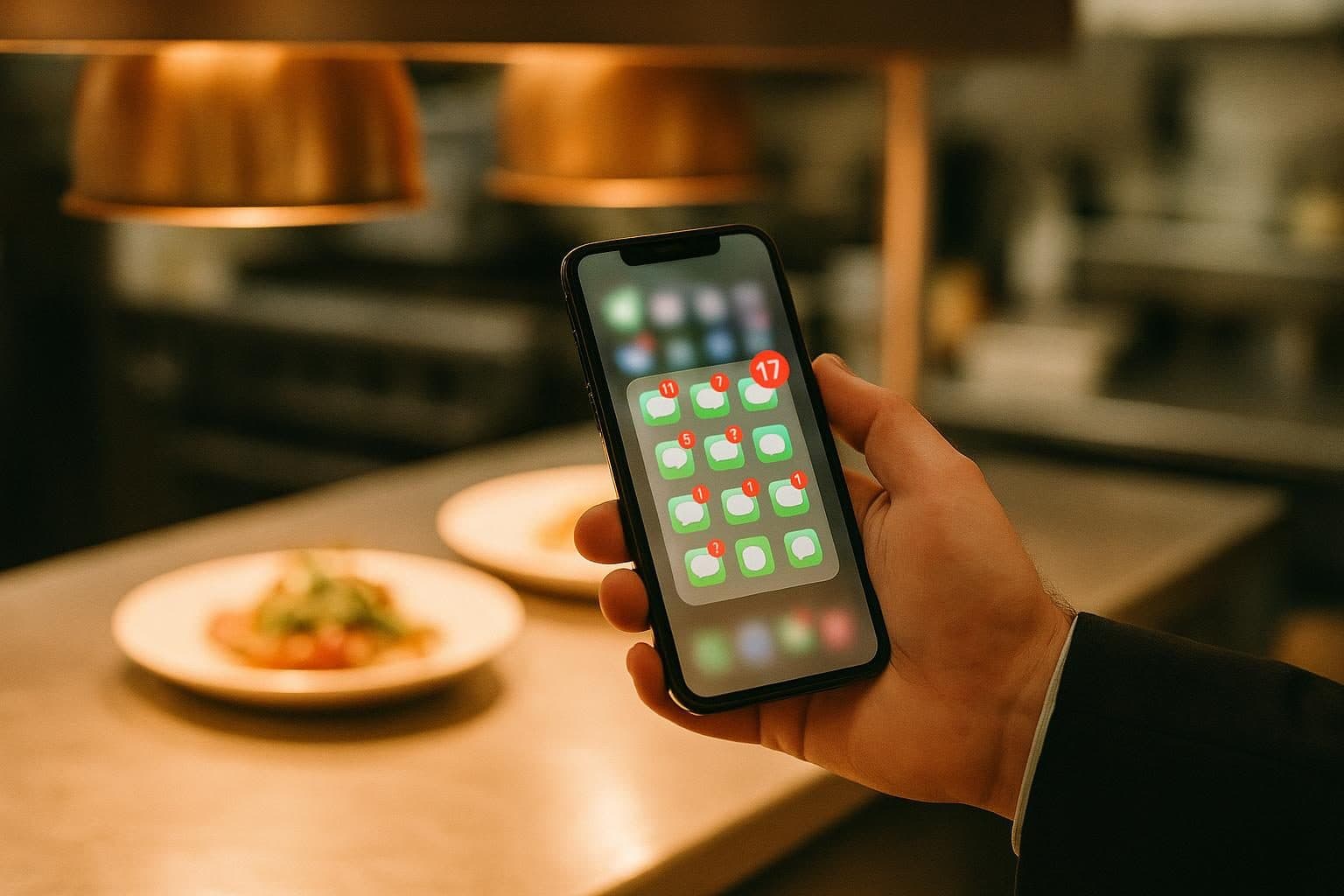
A person needs a form. An assistant needs an interface it can read and complete. Those are not the same artefact, and almost nothing in this market publishes the second one.
We measured that this summer, in the only way we could think of that produces a number rather than an opinion.
Field study · Amsterdam · July 2026
Can an AI assistant book the table?
Method and aggregate data: the Amsterdam study. No venue is named as a low scorer.
That number is not a verdict on those restaurants. Their sites load, they look good, and they convert people. They were built for a web where being found was the hard part.
Which restaurant reservation system should you choose?
Genuinely, in this order.
If price alone decides it
Buy a scheduler. Some of them are free and they are not bad software.
If your problem is empty tables on a Tuesday and nobody in town knows your name yet
Buy the demand. A commission on a stranger is cheaper than an empty room.
If your reservation book is somebody’s whole job
Buy an operations suite and pay what it costs.
If you need your own bookable infrastructure
A page that is yours, availability that is live, a guest list that leaves with you, and a booking that software can complete. That is the fourth thing, and it is what we spend our days on.

Whichever way you go, ask the five questions above before you sign. The monthly figure is the part of the bill everybody quotes. The other five lines are the part that decides your year.
Elena, G-Lab Studio
Want to see the fourth kind on your own place?
We build your booking page, connect live availability and hand you a panel. Thirty days live, a flat €49 a month after that, no commission on any booking.
Questions owners ask
What are the main types of booking system?
Four products share the name. A marketplace sells you new customers and charges commission. An operations suite sells restaurant depth such as floor plans and POS integrations. A scheduler sells a calendar. An action layer gives you your own booking page, live availability, guest history and an interface software can complete, for a flat fee.
Is a free booking system good enough for a restaurant?
If price alone decides it, yes: some schedulers are free and they are not bad software. They stop where the calendar stops, so there is no public page for your restaurant, no memory of your guests and nothing an assistant can book through.
Do restaurant reservation systems charge commission?
Marketplaces usually do, on new guests they bring, and on some platforms the fee follows the link a booking came through rather than whether the guest was new. Operations suites, schedulers and action layers normally charge a subscription instead.
What should I ask before choosing restaurant booking software?
Ask what it costs as you grow, which bookings carry a fee and why, whether online booking works without the marketplace, which country’s price applies to you, and whether you can export your whole guest list yourself.
Can AI assistants book a table through my reservation system?
Mostly not yet. In our study of 200 Amsterdam restaurants, 163 had a working website and none published a booking interface an assistant could call directly. A browser agent reached the final step on 16.